



Global digital product studio ustwo, in collaboration with the University of Bristol, has announced the launch of Prism, an open-source developer plug-in that provides visibility into the estimated operational emissions associated with AI usage.
As organisations rapidly adopt AI-powered tools and workflows, the environmental impact of these technologies remains largely invisible to the developers using them. Prism aims to change that by surfacing directional estimates of AI-related emissions directly inside the integrated development environment (IDE), enabling teams to consider carbon impact alongside other key engineering metrics such as cost, speed and performance.
Built using a transparent token-to-energy-to-carbon methodology informed by Green Software Foundation guidance and recent academic research, Prism is among the first open-source tools designed to help developers understand the estimated environmental implications of AI usage directly within their development environment. Prism is the first tool designed to provide developers with immediate feedback on the environmental implications of their AI interactions while they work.
“AI has become an everyday part of software development, but the environmental cost of using it remains largely hidden,” said Paolo Rizzi, Project Lead and Sustainability Principal at ustwo. “Prism is our attempt to make that impact more visible and help developers and organisations make informed choices”.
The public launch coincides with a Green Software Foundation community presentation on June 17, where the project and its methodology will be shared with developers, sustainability leaders and members of the global green software community.
“AI presents extraordinary opportunities, but with those opportunities comes responsibility” said Nicki Sprinz, CEO at ustwo. “As organisations increasingly integrate AI into the products, services and tools they use every day, we have a duty to better understand the wider impacts of these technologies”
While awareness of AI’s growing energy demands continues to increase, developers have had few practical tools available to understand how their individual usage contributes to overall impact. Prism is a first prototype to try to address this gap by integrating directly into development workflows, providing contextual awareness and encouraging informed experimentation.
Unlike traditional sustainability reporting tools that focus on infrastructure or organisational-level emissions, Prism delivers directional signals at the point where technical decisions are made.
“Developers are a fundamental part of the solution,” said Nick Hegarty, Executive Director of Technology at ustwo. “By making AI emissions visible during development, we hope to create greater awareness and support better decision-making. We believe even directional estimates can be valuable if they help start conversations and encourage more thoughtful AI usage.”
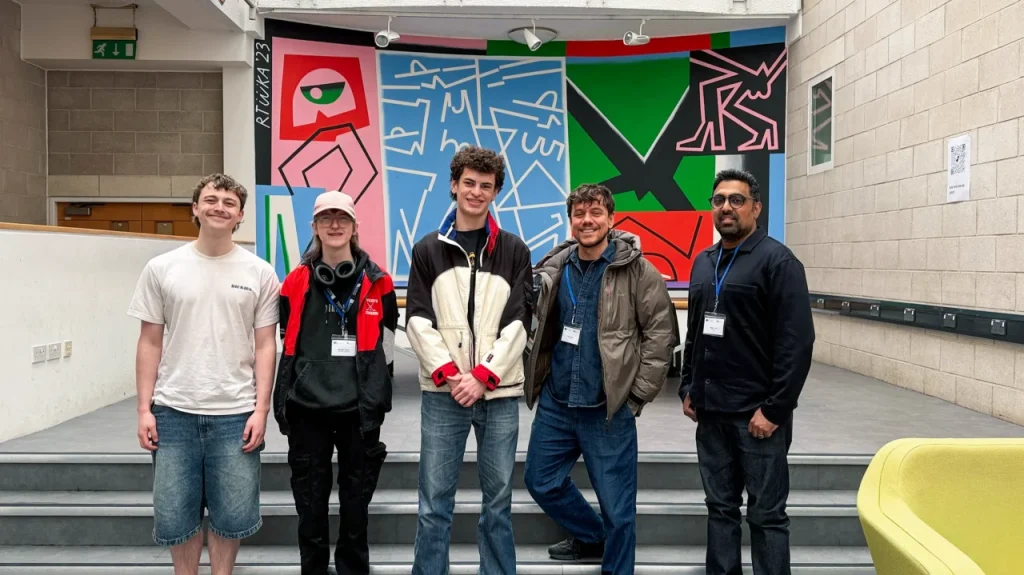
Prism was developed through a collaboration between ustwo and a team of students from the University of Bristol and is being released as an open-source project to encourage community participation, transparency and continuous improvement.
The creators emphasise that Prism is not intended to provide precise carbon accounting. Instead, it offers directional estimates based on the best available data and methodologies, giving developers a practical signal where previously none existed.
“We deliberately chose to build Prism in the open,” said Hegarty. “The challenge of understanding AI’s environmental footprint is bigger than any one company. Progress requires shared learning, open collaboration and a willingness to improve together.”
The launch comes amid growing industry discussions around responsible AI development, transparency and sustainability. As AI adoption accelerates across organisations worldwide, tools like Prism represent a new category of developer tooling focused on helping teams better understand and manage the broader consequences of their technology choices.

